
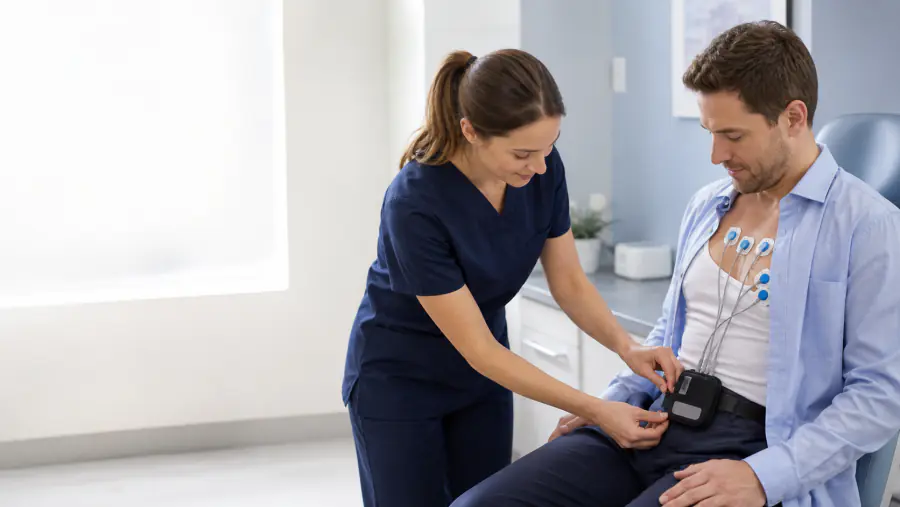
What is Holter monitoring?
A Holter monitor records the heart’s electrical activity continuously while you move through a normal day. It uses adhesive electrodes on the chest connected to a small recorder worn on the body.
A resting ECG captures only a short period. Longer monitoring may help record rhythm changes or symptoms that come and go. The prescribed recording period depends on the clinical question and the device supplied.
Having the monitor fitted
A technologist prepares small areas of skin so the electrodes adhere properly. Chest hair may need to be trimmed in limited areas. Wires connect the electrodes to the recorder, which may be clipped to clothing or carried in a pouch.
Before leaving, you should be shown how to protect the equipment, record symptoms, use an event button if the device has one, and respond if a wire or electrode becomes loose.
While wearing the monitor
Continue your usual activities unless the clinic gives you restrictions. A typical routine can help the recording reflect what happens during your day.
- Record symptoms and the time they occur as instructed
- Note relevant activities, sleep, exercise, or medication times if requested
- Keep the monitor attached for the full prescribed period
- Protect the recorder from water and follow the bathing instructions for your specific device
- Contact the clinic if the equipment is damaged or you cannot keep an electrode attached
Do not apply lotions or creams near electrodes while the monitor is being worn unless the clinic says they are safe to use.
Returning the equipment
The monitor stores information that must be downloaded and reviewed. Remove it only at the instructed time and return the recorder, cables, pouch, diary, and any other supplied items exactly as directed.
Prompt return matters because the equipment may be scheduled for another patient. Contact the clinic if you cannot meet the return time.
Skin care and follow-up
Adhesive electrodes can occasionally cause temporary redness or irritation. Tell the technologist before fitting if you have sensitive skin or a known adhesive allergy. After removal, seek advice if a skin reaction is severe or does not settle.
A healthcare professional reviews the recording after the device is returned. Confirm who will communicate the report and whether a follow-up appointment is needed.
Confirm your appointment instructions
Follow the device-specific instructions you receive. Confirm when the monitor must be removed and returned, and ask what to do if an electrode loosens or the device is exposed to water.