
What is an ECG?
An electrocardiogram records the heart’s electrical activity and displays it as a tracing. The tracing provides information about heart rate, rhythm, and the timing of electrical signals as they move through the heart.
The electrodes only detect signals—the test does not send electricity into your body. A resting ECG is non-invasive and generally painless.
What an ECG can help assess
An ECG may be requested as part of an assessment for symptoms such as palpitations, chest discomfort, dizziness, or fainting. It may also be used to review a known heart condition, check heart rhythm, provide information before another procedure, or compare changes over time.
An ECG is a short recording. If a rhythm change happens only occasionally, a healthcare provider may recommend longer monitoring such as a Holter monitor.
What to expect during the test
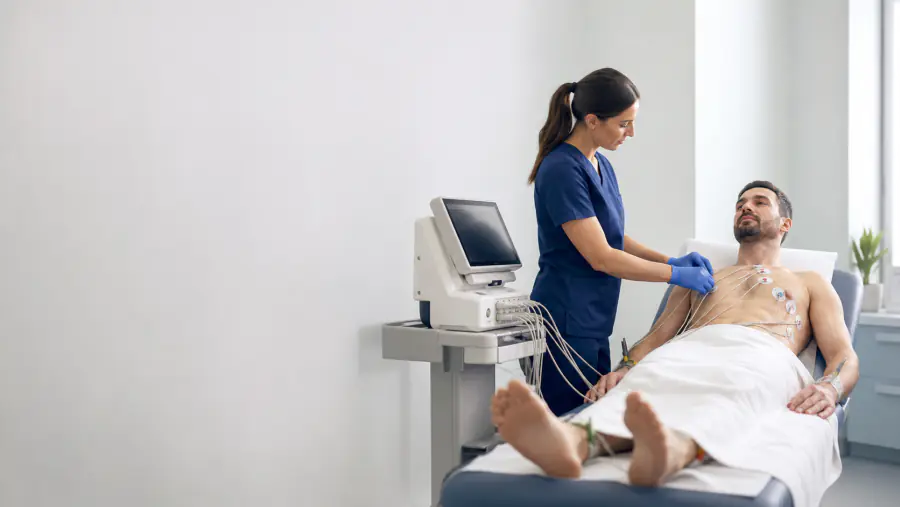
You may be asked to change into a gown and remove jewellery so the technologist can place adhesive electrodes on the chest, arms, and lower legs. Small areas of hair may need to be trimmed so the electrodes make good contact with the skin.
Wires connect the electrodes to the ECG machine. You will be asked to lie still, relax, and breathe normally while the tracing is recorded. Movement, talking, or tense muscles can interfere with the signal, so a section may be repeated if needed.
Preparing for your ECG
Follow any instructions included with the appointment. Wear comfortable clothing that is easy to adjust or change. Avoid putting lotion or oil on the chest on the day of the test unless the clinic tells you otherwise, because it can make electrodes harder to attach.
Continue eating, drinking, and taking medications normally unless an appropriate healthcare professional has provided different instructions.
After the recording
The electrodes are removed when the recording is complete. Mild temporary redness can occur where adhesive patches touched the skin.
The tracing is reviewed and a report is sent through the appropriate clinical process. Ask the clinic or referring healthcare provider how results will be communicated and whether further testing or follow-up is planned.
Confirm your appointment instructions
A resting ECG often requires little preparation. Wear clothing that allows access to the chest, arms, and lower legs, and follow any instructions included with your appointment.