
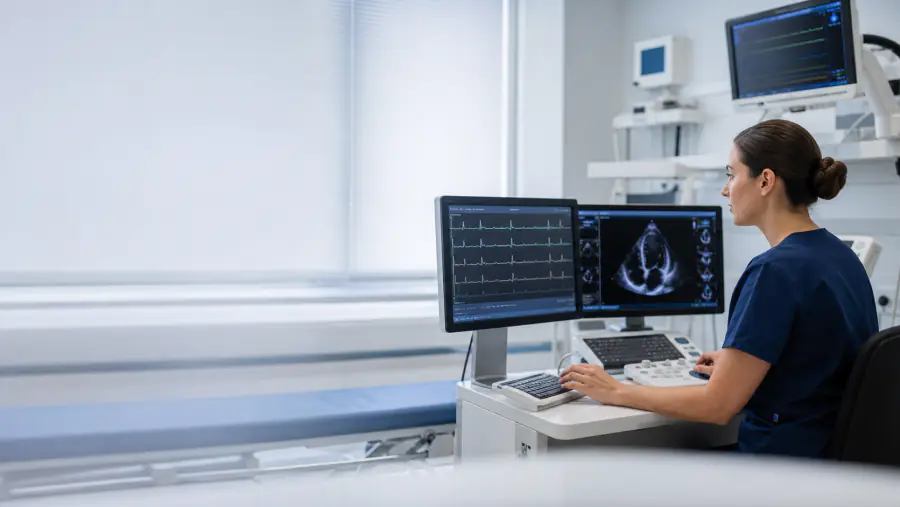
Understanding cardiac diagnostics
No single test provides every type of information about the heart. A healthcare professional selects a diagnostic test based on your history, symptoms, examination, and the clinical question being investigated.
The result is interpreted together with other health information. A test does not make a diagnosis by itself, and similar symptoms can have many possible causes.
Tests available at Simcoe Cardiology
- Electrocardiogram (ECG): a brief recording of the heart’s electrical activity while you rest
- Holter monitoring: a portable ECG recording collected over a prescribed period during everyday activities
- Echocardiogram: ultrasound images showing the heart’s chambers, valves, structure, and movement
- Exercise stress test (GXT): ECG, heart-rate, and blood-pressure measurements collected as exercise intensity changes
Your requisition or appointment confirmation should identify the test that has been requested.
Preparing for diagnostic testing
Preparation is specific to the test. Some appointments require comfortable clothing, temporary access to the chest for electrodes or ultrasound imaging, or instructions about food, drink, skin products, and medication.
Read the instructions provided with your appointment before arriving. Do not stop or change medication unless an appropriate healthcare professional has specifically instructed you to do so. Call the clinic if instructions are missing or unclear.
During your appointment
The person conducting the test will explain how equipment is placed and what you will be asked to do. Tell them if you have sensitive skin, mobility or accessibility needs, difficulty exercising, or any symptoms during the test.
Diagnostic appointments are designed to collect accurate information. The technologist may need to repeat a measurement, adjust a sensor, or ask you to change position.
Results and follow-up
Recorded information is reviewed and a report is prepared for the appropriate healthcare professional. The person performing the test may not be able to interpret or discuss the result with you during the appointment.
Before your test, ask who will communicate the result, how long the local process generally takes, and whom to contact if you have not received follow-up.
Confirm your appointment instructions
Each diagnostic test has different preparation requirements. Confirm the exact test on your requisition and follow the instructions supplied for that appointment.